
October 30, 2026
10/30/2026 | 55m 50sVideo has Closed Captions
John Kerry; Emily St. John Mandel; Benjamin Wallace-Wells
Fmr Secretary of State John Kerry discusses the potential for U.S.-Israeli attacks on Iran after the midterms and whether a diplomatic solution can be reached before they happen. Emily St. John Mandel shared her dystopian visions for the future of the United States in her new novel "Exit Party." New Yorker writer Benjamin Wallace-Wells breaks down the GOP's midterm strategy as elections approach.
Problems playing video? | Closed Captioning Feedback
Problems playing video? | Closed Captioning Feedback
October 30, 2026
10/30/2026 | 55m 50sVideo has Closed Captions
Fmr Secretary of State John Kerry discusses the potential for U.S.-Israeli attacks on Iran after the midterms and whether a diplomatic solution can be reached before they happen. Emily St. John Mandel shared her dystopian visions for the future of the United States in her new novel "Exit Party." New Yorker writer Benjamin Wallace-Wells breaks down the GOP's midterm strategy as elections approach.
Problems playing video? | Closed Captioning Feedback
Where to Watch Amanpour and Company
Amanpour and Company is available to stream on pbs.org and the PBS app.
Watch Amanpour and Company on PBS
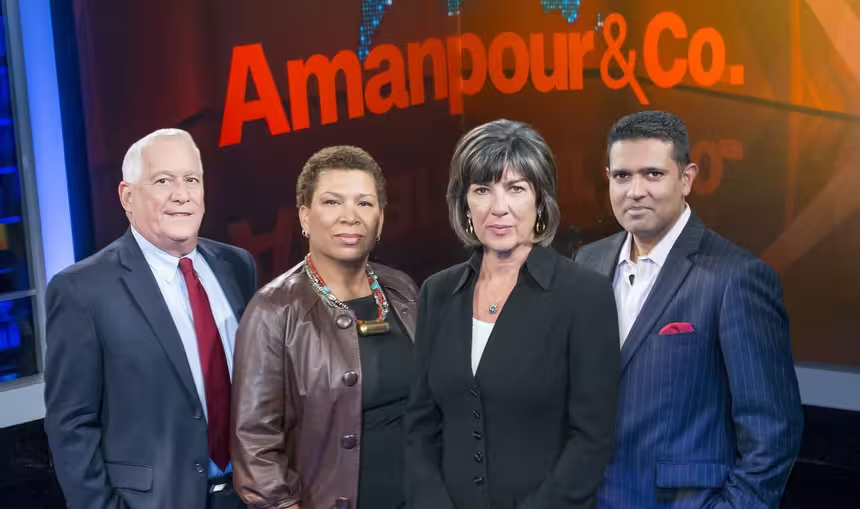
PBS and WNET, in collaboration with CNN, launched Amanpour and Company in September 2018. The series features wide-ranging, in-depth conversations with global thought leaders and cultural influencers on issues impacting the world each day, from politics, business, technology and arts, to science and sports.Providing Support for PBS.org
Learn Moreabout PBS online sponsorshipHello everyone and welcome to Amanpour & Co from Doha.
Here's what's coming up.
I do not believe, given the experience I've had negotiating in that region, that you're going to suddenly bomb them into a position where they're going to fold.
Poised on a knife edge between renewed diplomacy or more war on Iran, this Persian Gulf region is on edge again.
In Qatar, I asked former US Secretary of State John Kerry about the perils ahead.
Then... Hope lies in the idea of transience.
The worst moments in your life and the worst moments in your country's life do not in fact last forever.
Exit Party, a new sci-fi novel imagining two dystopian visions of what America's future could look like.
The author Emily St.
John Mandel tells Paula Newton about how they can help us understand our fraught times.
Thus, as Trump rallies Republican support in the final push before the midterms, The New Yorker's staff writer Benjamin Wallace-Wells shares why he says the GOP campaign has gone remarkably badly.
Amanpour & Co.
is made possible by Committed to Bridging Cultural Differences in Our Communities, and by contributions to your PBS station from viewers like you.
Thank you.
Welcome to the program everyone.
I'm Christiane Amanpour here in Doha, where the question on every lip across the whole region, are we going to be on the receiving end again of an American-Israeli war on Iran?
Last-minute diplomacy continues to stave off a post-midterm Trump attack.
From here, the Qataris presented a new offer from President Trump via J.D.
Vance, a letter in a bid to restart negotiations.
The road ahead is still totally unclear.
Trump holds the keys on the US side, but the Iranians are still somewhat divided.
Adding to the uncertainty, this week's Israel election, with Prime Minister Benjamin Netanyahu and his main rival, the ex-military chief Gadi Eisenkot, unable yet to form a government alone, and each struggling to form a governing coalition.
To say the stakes are sky high would be an understatement.
Netanyahu still wants regime change in Iran, while Trump, mindful of his legacy, is looking for a comprehensive nuclear deal.
Of course, the Obama administration had negotiated one, the 2015 JCPOA nuclear deal, which Trump then pulled out of.
The former US Secretary of State John Kerry was the main negotiator for Iran, with Iran, and he joined me to discuss possible paths forward.
Former Secretary of State John Kerry, welcome, I was going to say to the program, but yes, to the Global Perspective program here in Doha.
It's very good to have you.
Can I ask you, as we end this day of conference and talking about all the issues affecting this part of the world, which you were so intimately involved with as Secretary of State, the latest is unsure, unclear.
President Trump talks about a short, sharp, decisive round against Iran again.
On the other hand, we hear that he has authorized a letter by his Vice President to try to reach the Iranians in a more diplomatic way.
We're not sure exactly what's going to go on.
What do you think could happen and what should happen?
Well, unfortunately, things are so unpredictable that just about anything can happen.
I think it would be an enormous mistake just to open up post-election with a military barrage that is not what will impress the Iranians or bring them to the table in a more serious way.
In ocus, the key here is reallyengaging in real diplomacy.
In real diplomacy, it could be several tracks at the same time, one more public and one veryprivate, coordinated clearly, but it doesn't appear as if right now it's still the threatened game.
And what I found in my negotiations with the Iranians, which I produced the most significant nuclear agreement we've had in decades, is that we're in maybe four decades, and which did take a nuclear weapon off the table with certainty.
Unfortunately, the United States pulled out of that agreement, giving life through the threats that the IRGC and others had always told the Ayatollah don't trust the great Satan, the U.S.
and he did put his efforts into trying to secure the agreement and unfortunately it was destroyed, which only raised mistrust and even anger.
So I think if we can get a calm moment here where post-election people quiet down a little bit and get serious about trying to make peace within the region or come up with a structure that can lead to peace as you take certain steps to build confidence.
I mean, that's really what's necessary right now.
Insults will drive Iranians further into a corner, certainly the IRGC and the current government.
And I think it's important to try to open up a much broader, more important dialogue.
When we negotiated the Iran nuclear agreement, China, Russia, Germany, France, Britain were all part of that discussion.
And that's what we nearly need to return to.
And the EU, I might add, in addition to that.
We need to get back to a broader base and a better opportunity to be able to make progress.
Secretary Kerry, it was guaranteed by the UN Security Council, a rare time when they all agreed and the resolution was passed to confirm this nuclear deal.
It was President Trump who thought he could get a better deal by pulling out when he did a few years ago and talked about maximum pressure.
Now we know that that didn't work, but I do actually want to ask you, because there were many inside America, maybe other parts of the world, Israel, maybe even Saudi Arabia, who didn't think the deal was good enough.
Why did you think the deal was good enough?
Well, I thought the deal was better than good enough, because it did things that we've never achieved before.
Iran, in compliance with the agreement that we reached, destroyed tens of thousands of centrifuges to limit the amount of uranium that they could enrich.
We put 130 inspectors into Iran who on a daily basis were able to check the uranium production in their program.
We never guaranteed to people that it might not be that Iran would cheat.
Maybe they would.
What we did guarantee to people was we have the intelligence capacity, the intrusiveness of our inspections, a level of transparency that would guarantee that we knew they were then trying to cheat, and we would be able to take longer to be able to deal with that.
It is not insignificant that the UN ratified or approved of the agreement that had been reached.
It was not insignificant that China and Russia joined in helping to make that agreement come together.
And it's not insignificant that we actually had an inspection structure with television cameras and visibility that gave us unprecedented insight on what their program was and could be.
If President Trump really wanted to change and make a better agreement, why didn't he put something on the table?
Why didn't he actually make a proposal and have the Iranians respond to it or gain into another negotiation?
No.
He rushed into a war, particularly in the last months, with a whole bunch of false assumptions that have made life more expensive and more dangerous for people all over the world.
So what would be another proposal?
Because clearly they're going to go again, wanting to, in other words, they want to obviously to keep the nuclear issue on the table and deal with it from the start, not have all these first measures and then do nuclear negotiations.
What is the best you think that the US and Iran can agree to now?
Well, I think they could get back to very close to the agreement that we had.
I do not think after being bombed, after having the Ayatollah killed, the wife killed, the son killed, so many disruptions within the region, I don't think it's going to be very easy to come in there and argue that you're going to get more than what they'd already agreed to, which the world said was sufficient.
But maybe you can get a piece here and there.
I certainly hope you can.
If it's possible, let's try to do that.
But don't get stuck on it.
Moreover, we knew that we had to deal with missiles being transferred from Iran to Assad in Syria.
We knew that the Iranians were the IRGC funding and supporting and teaching and helping to plan for the Houthi, that they were supporting Hezbollah.
All of those things had to be dealt with.
But one of the objections to the agreement was, "Oh gosh, you guys didn't put everything to bed.
You didn't deal with every issue."
And people sort of ran for cover under that guise.
The fact is that if we had included Houthi and Palestine and Hezbollah and all those other issues, we never would have gotten to the nuclear one.
And there would have been an interminable negotiation, during which time they had the ability to be able to improve their nuclear program.
So we thought first, President Obama directed, first, get rid of the nuclear agreement, get rid of the nuclear threat, don't have a bomb hanging out there as a potential something, which would have strengthened their hand in any of those other negotiations.
So I'm confident that what's available to the United States now will be very difficult, because in all of the conversations we had with Iran over four years, that I had with them over that period of time, they never raised the Straits of Hormuz, nor did we.
It never was weaponized as the entity, as the notion that could give Iran much greater leverage in the region and much more impact on the world.
But that happened as a result of President Trump rushing to war.
And so he's put himself in a very disadvantaged position from which to try to negotiate.
And I think it's going to be important for them to quietly seek a much more respectful pathway to try to find the kind of agreement that is necessary here.
I do not believe, given the experience I've had negotiating in that region, that you're going to suddenly bomb them into a position where they're going to fold.
And secondly, you can't bomb the memory of how to make a bomb of the nuclear fuel cycle into oblivion.
That is in the minds of scientists, that's in the pathway that they have already carved out, which they're fully aware of now.
So they've mastered the nuclear fuel cycle, and President Trump and this administration are going to have to deal with that reality.
Let me just ask you, because you've talked a lot about the U.S.
and what it should do.
Certainly the Trump administration believes that it's winning.
It believes that it has done all the right things.
It believes that the big blockade on Iranian ports is actually working.
It still believes, potentially, like Israel does, that there may be a regime change option.
But I guess what I want to ask you in this case is, the midterms are coming up, you're a former senator.
What, on foreign policy alone, what do you think Congress should do if it gets back the majority either in the Senate or in the House on these issues?
Well, just let me just say very quickly that yes, there are those other issues, and they think they're doing the right thing.
I think that the economic close-down, shutdown, the boycott is working.
Yes, it's having an impact, no question.
And it will have pressure on Iran.
But that still requires a different kind of approach and negotiation than we're seeing today.
So what is the first priority?
Well, the first priority is making clear that the United States of America stands with Ukraine, that the United States is prepared to provide the weaponry necessary for Ukraine to be able to defend itself, and only when we make it clear to Russia that the United States is going to be there without this vacillation, without this back and forth, without the President playing cozy with President Putin, that we're there because there are serious values at stake.
And you can go back to World War II and the role the United States has played in Europe and in the rest of the world as a result of that war to try to make the world a safer and better place.
Having a large nation invade a small nation is precisely what the UN and what the NATO and other alliances have been built to try to prevent.
And we cannot, we cannot and should dare not allow that to be otherwise with respect to Ukraine.
Secondly, we need to negotiate with China on the subject of AI.
We need to resolve this question of whether or not we're going to pursue AI without any transparency, any legitimate international rules of the road and guardrails.
And I think that's a second policy we have to do.
Third, obviously, the climate crisis is getting worse, not better.
Every decade is hotter than the last decade.
People are finding it harder and harder to work in certain parts of the world.
We see damage that is just beyond description all over the world as Mother Nature reacts to what is happening.
So we are playing globally a very reckless, dangerous process with respect to the unwillingness of people to not burn fossil fuel that doesn't capture the emissions.
And the more we contribute to the fossil fuel, the more we are going to have a problem with respect to the climate crisis.
And a health problem goes with it, Christian.
You know, pandemics will be more frequent.
Pandemics may hit with greater impact.
We're already seeing the difficulty of dealing with the second round of Ebola in West Africa.
Honestly, we have to become, the United States has to become a serious country with respect to these problems in the world, and the rest of the world needs to either lead or join in that, because we're all at risk as a result of our current behavior.
I have one final question.
We're here in Doha.
This is the center of American alliance in this part of the world, and yet we see Saudi Arabia moving to make an alliance.
It's called the Mecca Defense Pact with Pakistan and with Turkey, and trying themselves to calm things down, particularly with Iran, etc.
Do you fear, do you see a problem with America and its alliances now, and how does that affect America's national security?
Well, obviously it affects America's national security not to have unity or greater numbers of people coming through a common understanding of how we are more secure.
So as nations break off into these individual alliances, the world itself will become far more complicated, harder to manage, harder to build the coalitions you need to deal with some of the problems we face in the world today.
So I think it's a challenge, but it's not insurmountable.
You know, we will find a way forward, I believe, with those countries and others in the region.
Qatar has been, frankly, an important player in coming together to help try to resolve some of these differences and provide a pathway for back-channel diplomacy, which is extremely important.
And hopefully, we will find more common ground in the region.
There are countries in the region which are actually pathfinding today.
You know, you have an oil and gas country like the UAE, which is actually leading the world in producing a combination of clean energy with storage with their nuclear power.
They've built four nuclear plants in the last years and they're joining that to be able to provide firm, clean energy to the world.
And so there are many other things I think happening on a global basis, which unfortunately, our country, our administration has decided to either boycott or ridicule or insult and certainly to move away from.
You know, diplomacy requires meeting people with really substantive ideas that are in the interests of those people meeting.
And diplomacy works when you meet the interests of a broad group of people who are trying to do good things for humanity.
We need to get back to that.
We are becoming more divisive, less organized, and that hurts everybody, in my judgment.
Amidst all the chaos that we see, the fact is we can win the battle of dealing with these challenges.
There's nothing that isn't human-created that isn't subject to our solution.
And we have many solutions in technology and otherwise that are being developed now.
If we will come together in a more coordinated way, Christiane, we can win this fight.
No question in my mind.
Thank you.
In other words, it's still in our hands.
Secretary John Kerry, thank you so much indeed for joining us.
Thank you.
So a hopeful note from John Kerry there.
And now handing over to Paula Newton in New York for the rest of the show.
Thanks, Christian.
When the COVID-19 pandemic swept across the globe, many thought author Emily St.
John Mandel prophesied it in her hit 2014 novel, Station 11, which explores how a devastating flu leads to the collapse of civilization.
Now Mandel is back with something equally uncanny and surreal, drawing from our anxieties around the current political moment.
Her new book, Exit Party, set in 2031, depicts two dystopian visions from the United States, one ruptured by a second civil war, another ruled by universal surveillance.
I spoke with Emily St.
John Mandel about the lives that play out in these disorienting landscapes and the hope they can offer us.
Thank you so much for being on the program.
I will start this interview with a confession.
I did not read any of your novels before this one, and yet everyone that I told about this interview almost universally said, "Oh, I've read her.
She's amazing."
You have a standing army of devoted fans that, quite frankly, would have been useful in "Exit Party" as a narrative device.
But I just have to start with asking you, you know, the mental scaffolding that is going on in this novel really threw me for a loop.
I just have to ask you, how the heck do you come up with this stuff?
I'm going to be real with you.
I have no idea how I come up with this.
I will tell you, though, the starting point for this novel was twofold.
I had a character, Ari, who I found to be extremely compelling, and I wanted to structure a novel around her.
And then also, I was looking at the incredibly intense level of political division in this country where we live, and I thought it would be interesting to imagine a worst-case scenario and then to imagine the aftermath of that.
So that is why Exit Party opens sometime after a second American Civil War, and it's a dangerous but also very hopeful and literally formative time where the Republic of California has been declared and we encounter Ari the night the curfew is lifted in Los Angeles and everybody's going to a party.
And there you have the oeuvre of this book, I will call it.
Now look, you're a Canadian living in America and I know you love living in New York.
It's been home for you for many years.
So I want to ask you how much did the current political situation unfolding as it is influence your writing?
And definitely it is grim even though we will speak about hope in a moment.
Absolutely.
It had a profound impact on me.
And to back up a little bit, I actually have dual citizenship.
My father was from Southern California.
So I was born with dual nationality and have both passports.
The political reality we live in is often quite grim.
It feels a little bit fraught these days.
But for me, hope lies in the idea of transience.
The worst moments in your life and the worst moments in your country's life do not, in fact, last forever.
And that was very much a guiding idea in this novel.
And so this novel is structured in two parts, the A side and the B side, we'll call it, the collapse state versus, you know, something that is more of a surveillance state.
I confess in reading it, I went I kind of went back and forth between the two.
Why this literary tool?
What did it allow you to do?
Well, there's an idea that I've been really interested in for a number of years, and that is the idea of the counter life.
Your counter life is the life that you did not live, where perhaps you married a different person, or you stayed in Canada, or, you know, you emigrated instead of staying, you went to a different school, took a different job.
We all have them, these hypothetical lives playing out on these hypothetical parallel tracks.
And what I found myself thinking as I was beginning to write this novel is, I have spent a lot of time thinking about the counter life of the individual.
But what is the counter life of the state?
That is a fascinating thought experiment to me.
Just imagining the inflection points that not just America, but any country have.
The election that went one way instead of another, the policy enacted or not, a decision taken to go to war versus not doing that.
And I thought it would be interesting to imagine on the one hand, the possibility of our current version of our country taking a dark turn.
And I want to just pause for a second and say, I am not saying that there will be a second American Civil War.
I've actually been thinking of this lately in terms of climate research, which is to say that climate researchers will release a range of scenarios.
This is what the world will look like at +2 degrees.
This is what +2.5, +3 degrees look like.
Nobody can tell you which of those scenarios is true.
The point is that they are all, unfortunately, plausible, given the trajectory that we're on.
So it was in those terms that I found myself thinking of the world that opens this novel, where the United States has collapsed, new countries are coming together in the aftermath.
But then I thought, what is another scenario?
What is a counter-life of that idea?
And that was how I came up with the surveillance state.
Again, everything you described is so weighty, and yet it's hopeful still.
And you do talk about the resilience that you want people to see in this book.
I confess, I find myself applauding this approach.
And yet some people would dismiss you and I as being naive about that hope and resilience.
Well, you know, it's interesting you should say that because I have had moments of fearing the same thing.
Am I being naive and thinking that humans do come together in moments of crisis and that we do actually need community to survive?
And then I had a wonderful onstage conversation a few days ago with Sebastian Junger, a war correspondent, who's actually been to war.
And he said what my suspicion had been.
He said, "You know what?
People do come together.
They seek out community when things are very difficult."
And I find incredible hope in that idea.
There is also hope in this idea of transience I just mentioned that, you know, just because things feel dark at this moment doesn't mean they'll feel dark in the moments to come.
There's, you know, as you alluded to, this side of the novel where the US has become a surveillance state.
I based that on elements of present-day China, the intense level of digital surveillance that its citizens endure.
I was also thinking about Stasi, the Stasi system in East Germany.
And here's where hope lies.
A lot of what I know about the Stasi I learned in the DDR museum in Berlin.
Because the Stasi are gone, we make museums about them.
So people do come together in terrible moments.
Terrible moments don't last forever.
And look, you know, the book because that is what we would do on the night the curfew were lifted.
It was very much a party that so many of us can relate to in a strange way.
And I do want to get to that character, Ari.
And I will say one of the most fascinating things in reading your book was how the complexity of your characters literally unfolds in just a few paragraphs.
And we get to Ari, right?
She's a deeply flawed person.
She's just been released from jail after serving 18 years, in fact, for a serious crime.
You know, she wants to be a better person, and we see her continually drawn to criminality, despite herself.
At one point in the book, she asks, you write that she asks, "Am I a monster?"
I mean, why this character?
She was so interesting to me.
I'm very interested in the stories that we tell about ourselves and about our lives, and the way sometimes they might be true, and sometimes they're a little more, let's say, aspirational, in Arya's case.
So, she is a deeply flawed character.
She's somebody who has been pulled all her life toward criminality.
It's this kind of fundamental character flaw or tendency toward corruption that she has.
So, in the version of the world that opens the novel, that's the version where she did commit a serious crime and went to prison for 18 years.
In the surveillance state, that is a version where that same character, drawn to crime, channels that toward an interest in law enforcement.
She's a detective in a fairly shadowy secret police force on that side of the book.
She's neither morally upright nor a monster.
I think the truth lies somewhere in between.
I think I think she's complicated and I found her interesting to write about.
You know, I do want to hopefully, if you'll indulge us a little bit and read a passage, it's from the B side of your novel, from Ari or Abari's perspective.
And it really gives us a window into this police state.
I found it so searing.
The minute I read it, I really was kind of stopped in my tracks, if you'll indulge us for a minute.
Absolutely.
I'd be delighted.
So to set this up a little bit, this is Abari.
She's a version of this person who does become a high-ranking detective in this paramilitary force.
And she has devoted her career to that force, which on this side of the novel is called service.
I have lived all my life in the ordered calm of the state, and I have always believed in its essential contract, which can be summarized as follows.
The opposite of disorder is harmony.
Peace is achieved through surveillance.
Service is the surveillance department at the state.
Harmony at any cost.
So it's a little bit chilly and I see why it struck you.
It did.
Harmony at any cost, and if we refer back to what you had said in terms of what societies you had based it on, sometimes we're naive, right?
We believe we live and work in democracies that when we don't really see ourselves Comparable to people who clearly understand that they live in the so-called surveillance state So when you say a harmony at any cost, what does that mean to you?
Well, what it means to me is the kind of propaganda that one encounters in a more repressive country I am, you know, it reminded me of some of the slogans that I saw when I visited Vietnam about a year ago.
The beauty of Google Translate is that although I do not speak or read Vietnamese, I could hold up my phone and see what the banners said, you know, on either line, on either side of the streets in the major cities, and it's very reminiscent of that.
I think that this idea of harmony at any cost, that's the kind of thing that one expects a repressive surveillance state to say, because you do have to sell it in some way to the civilians to prevent some kind of uprising.
I was imagining that, just the intense level of propaganda that one is surrounded by in a country like this.
I guess with so many of us questioning what we read now, especially in the age of AI, which I will get to, it is interesting, and perhaps, as you said, why it likely stuck out to so many readers.
I mean, even within one distinct reality and timeline, you make it clear that an individual can lead multiple different lives and versions of themselves.
I think all of us can relate to that.
So I'm wondering what sliding doors moment have you had where you literally stopped there and think to yourself, well, what is happening here?
So many.
I've had so many.
Yeah, that's an idea I find really interesting.
You get to a certain point in your life, you look back, and you realize you're not really looking back at a life, singular.
It is really one life after another, isn't it?
You know, the life where you were in this relationship or lived in that city or held this particular job.
And those, I don't know what to call them, those seasons of life, those periods of a life, it's what it adds up to is a reality where we do in fact have a multiplicity of lives.
And I love that idea.
You know, for myself, I trained as a dancer.
So it's fairly easy for me to imagine a life where perhaps I stayed in Toronto and kept dancing or going back even further a life where I never left British Columbia.
None of my family left.
They're all still there.
I think we all have these inflection points, though, where you can so easily imagine going through one door instead of another.
I listened to you in an interview and I laughed out loud just the dual life that you're in a literary career and you are known for so many novels and you were planning a book tour.
At the same time, you were an executive assistant trying to plan somebody else's travel.
Can you give us some insight into what, you know, the transformative nature in your life and the kind of hope you want it to give to struggling artists of any description?
Absolutely.
So, I'm from a very working class background, which means in practical terms, it was terrifying to quit my day job when I started having some success as a novelist.
So, I published three novels with a very small press, and then Station Eleven.
That was my fourth novel, and it was a kind of juggernaut that rolled over my life, and nothing was ever the same afterwards.
At the time, when that book came out, I was administrative assistant.
It was a pretty great job.
I was an administrative assistant in a cancer research lab at Rockefeller University in New York.
I enjoyed it in a lot of ways.
Really smart people, interesting environment.
The research was fascinating.
And so I held on to that job for probably much longer than made sense.
I ended up working remotely for really long periods of time, you know, weeks at a time because I was out on the road on these endless book tours.
And I remember this increasingly surreal situation where, you know, one of my jobs was booking travel for my boss, you know, to go to scientific conferences and such.
But I wasn't booking my own travel.
I had three different publicists doing that for me.
Or I remember one afternoon when I had to leave work early because I had a photo shoot at Time magazine.
It just became increasingly surreal.
And then at a certain point, I remember I did a podcast with a stand-up comedian, Josh Gondelman.
And I told him that this is something I was grappling with, keep the job or leave it.
And he said that another comedian had given him advice once.
This man had told him, keep your day job until you can't afford to anymore.
And I found that framing to be incredibly helpful because I think that young artists so often think about it through the opposite lens, how soon could I possibly quit my day job?
But that can lead to the most incredible financial stress.
And that will take you further away from your art than probably keeping the job would have.
So yeah, once I framed it in that way, then it made sense to eventually quit that job because it felt like it was beginning to cost me opportunities.
Yeah, that is extremely wise advice.
And it is turning again, as your novels do, just turning the conventional wisdom on its head.
Emily, you know, as you said, Station Eleven has been read by so many, and I know so many people recognize your name and your novels.
Some people even recognize you in person.
And in a strange way, I want to connect that to AI, because so many are wondering, well, can't we just, you know, even write our own novels, we just put it into AI, and you say, you know, develop a novel in this genre for me today.
We'd never have the surprise, right, of encountering you, you know, at the mall or at a museum and saying, I love your work.
In that in that context, what do you believe AI will do for that kind of creative being that you are and that others are?
Can it be a tool?
Do you think we should just, you know, basically skew it all together?
What's your thinking on this?
Well, I have a few thoughts on this.
I don't use it personally because I don't think -- for a couple of reasons.
One is that if you use AI to write a novel, you didn't write the novel.
I co-wrote the novel because six of my novels were stolen by Anthropics and other companies to train the large language machines.
I'm part of a BART's, the Anthropics class action lawsuit.
So, you know, to start with, you didn't write it.
If you use AI to write your novel, you did cheat.
If you use AI to write a novel, you're really resting on the shoulders of all of these other writers like me, who for myself, I have developed my craft over incredibly hard work over many, many years.
So it's fundamentally dishonest.
I find AI to be morally compromised, even setting aside the question of plagiarism and coasting on other people's labor and talent and craft, in the sense that it's so environmentally catastrophic, you know, the, the huge volumes of fresh water that the data centers require, the reports from neighbors at the data centers, and just this unspeakable level of constant noise that traumatizes them, I would say.
I think it's fair to say, you know, given some of the interviews that I've read.
Yeah, my, I find AI to be unethical in the context of the arts.
It's theft and it's cheating.
You are certainly anything but equivocal on the topic of AI and I think give us, as always, a lot of food for thought, including what we've read from your novels.
I have to say so many people were so excited about this interview.
So I have to thank you, Emily St.
John Mandel.
And we will continue to look forward to your future works.
And I hope you've got a lot in the pipeline.
Thanks so much for joining us.
Thank you so much.
It's been a pleasure.
So it is the final stretch before the midterms, which are now just days away.
And with the control of the Senate and the House at stake, President Trump has been crisscrossing the country, hosting a flurry of rallies in a bid to secure Republican votes and keep historically red states like Texas in GOP hands.
Between the scandals and Republicans distancing themselves from the U.S.
leader amid low approval ratings, their election campaign has been far from smooth, as New Yorker staff writer Benjamin Wallace-Wells tells Michelle Martin.
Thanks Paula.
Benjamin Wallace-Wells, thanks so much for joining us.
Great to be here.
So we are just days away from the midterm elections as you and I are speaking now.
The control of the Congress is at stake.
You are looking at Republican campaigns across the country for your latest piece in The New Yorker.
You found signs of Republican campaigns that were in trouble in surprising places.
So just what's kind of the overview there?
Give us the through line and then we'll kind of go race by race.
What's been interesting to me, and I began just a couple of weeks ago trying to think through why is it that Republicans are struggling so much in states that they are usually quite comfortable in, where President Trump won in 2024 by 10 points, 11 points, 13 points.
And I started looking closely and going around and seeing the debates and the events that Republican candidates were staging.
And the broad picture, I think, is that many Republicans are finding it quite difficult to defend President Trump's second term record.
You know, so on top of whatever, you know, line of scrimmage we've drawn across the last 10 years, red versus blue, and whatever penalty a sitting president tends to incur in midterm elections, what we have is, in debate after debate, Republican candidates turning away from defending the tariffs, defending the war, defending data centers and the president's relationship with billionaires like Elon Musk.
And there's just, I think, a general discomfort with a lot of what he has done, which I think is telling both in terms of where the party stands for this election, but also what might come next.
Is there anything sort of surprising about this, just simply because the president has had such a heavy hand in picking some of these candidates?
I mean, the fact of the matter is people call it his party now.
It's Trump's party now.
I mean, he is the head of the RNC, you know, for all intents and purposes.
In fact, his daughter-in-law was the head of the RNC earlier.
And another former head of the RNC is running for Senate in North Carolina, Michael Watley, and likely to lose.
I think it's extremely surprising.
And it's not just because of those candidates who he's handpicked.
Ken Paxton in Texas is another one.
But because for several cycles, what we've seen is Republican candidates echoing the tone, the kind of bombastic, you know, demeanor, but also really defending to the hilt of the president's policy positions.
And, you know, this is on tariffs, on immigration, and up to and including January 6th.
And, you know, so to see, you know, some break from that, especially when it comes to the to the, you know, questions that have been at the center of his second term agenda, I think is is pretty interesting.
So let's go to North Carolina.
You just mentioned that Trump went there in 2024.
This hand-picked Senate candidate, Michael Watley, he's trailing former Democratic Governor Roy Cooper.
Trump recently actually acknowledged this at the rally.
So why has this race so difficult for Republicans?
What Trump said at that rally, he was speaking of Roy Cooper, and he said he's going to be our next senator, and that's a little crazy.
And it is, at some level, a little crazy.
What we're seeing is not just in North Carolina, but in Georgia, Democratic candidates are way out in front.
In South Carolina, there's a competitive race.
And what those Democratic candidates have been able to seize on in those races is the high gas prices.
They've been able to tie that to the war in Iran and the president's indifference, seeming indifference, to questions of affordability.
And, you know, Georgia is actually an even more vivid example of this.
They've been able to, you know, say that, you know, the president's relationship with donors and money is corrupt, you know.
John Ossoff speaks of a coin-operated, you know, political system.
So there is a willingness of Democratic candidates in those states.
Ron Cooper, the sitting governor of North Carolina, is a candidate in North Carolina.
There's been a willingness of those Democratic candidates to take a kind of more populist position and just say, you know, things have gone way off track in Washington.
They have before, though, and that's not a hard position for Democrats.
Right.
And any other party, power party.
Yeah, any other party to say, look, this is just ridiculous.
But I guess what's interesting and what's puzzling to people, if every poll to this point, the Republican base has been with the president and people, you know, like I've been out canvassing too in lots of different places.
You interview people at the pump, right?
Filling up their cars.
You go, how you feel about that?
Don't like it.
Feel bad.
Well, do you know why gas prices are so high?
And they can correctly identify the cause of it, which is the state of Hormuz being closed.
To this point, Republicans were still with the president.
They accepted his analysis.
One thing that I find pretty striking and that reinforces that point is if you look at the president's approval rating, February really is a pivot point.
When we started going to war with Iran, even though it's not the most intense war that the United States has ever fought, even though there's not a huge commitment of troops, there's a pretty clear line of about 40% approval that he'd mostly been able to stay above.
He just starts going down, down, down.
If you look at the timeline, that's basically when these races start to get competitive in places that they hadn't been before.
So there is something, I think, for ordinary voters that's quite clarifying about war, you know, that makes people see that, you know, here is where the government's commitments lie.
Here's where the president's commitments lie.
And they don't lie, you know, with keeping prices down.
Is it the Republican base starting to soften, have skepticism?
Is it the growing number of people who really prefer to identify themselves as independents?
Where's the disapproval coming from?
I would say it's two areas.
If you look at what the president did in 2024, he brought in a pretty significant number of voters who are outside of the system, who are voting for the first time or irregular voters.
That population skewed younger, skewed male, skewed Hispanic.
Those voters, Gen Z voters, Hispanic voters, are abandoning him in droves right now.
And this is part of why Texas, for instance, is competitive.
And so one source of that softness is probably that in 2024, some of those voters were just the anti-status quo voters and the status quo was Democratic.
And now they're either sitting this one out or they're still anti-status quo voters.
They don't like what's going on and the status quo is Republican.
And so at some level, I think that is a big part of the story.
But when we look at places like Kansas and Iowa, Kansas has not had a Democrat in the Senate since 1939.
You know, Iowa is a state that the Republicans won by 13 points, you know, just a year, you know, a little more than a year ago, two years ago.
Ohio, where, you know, J.D.
Vance is from, the vice president, where Trump won.
All those states are competitive.
Texas, you know, most of all.
All those states are competitive.
And part of what has happened there is just the kind of long-term exhaustion with the president's policies.
If you look at the, you know, at the debates and events, there's still, many of the Republican candidates are still trying to channel the sort of topic of the election back towards the culture war to pinpoint Democrats on where they stand on trans athletes in sports, for instance, a big issue in 2024.
But it's not really working.
And the concerns of voters are really economic.
Their pocketbook concerns are about affordability and all of the concern about the straight and form moves and Elon Musk's influence in politics and the data centers that kind of feeds quite neatly into that affordability narrative.
So I think independents and sort of more moderate Republicans in red states who I think are sort of feeling the same pressures that all voters are.
We've talked a lot about the president's kind of role in all this and his policies and how these policies are finally starting to hit people.
But aside from that, do the Democrats just have better candidates this year?
And are the Republican candidates worse?
Yeah, I think the Democrats have very good candidates this year.
You know, they are generally young.
They are, in most cases, running from outside of Washington, outside of elective office, in a way that means they don't have to defend the Biden administration's policies, which were quite unpopular.
They've taken the opportunity to sort of put a new face on the party.
And I think in general, they've debated well and campaigned well.
The Republican candidates, I think, are terrible.
There are a couple of places where Trump has sort of forced the party's hand.
I think in Texas, the push for Ken Paxton, who has really lengthy corruption allegations against him.
President Trump was dissatisfied with John Cornyn, the incumbent, and he pushed hard for Paxton to be the nominee.
And that may well cost the Republicans the seat.
Mike Collins in Georgia is a messy candidate, a son-in-law who's an open white supremacist, and John Hossoff has been able to take advantage of that.
But if you look across the board, there are a lot of pretty good Republican candidates who are the candidates that the party establishment, not just the president, wanted.
You know, I would say Ashley Hinson in Iowa, a congresswoman, has been, to me, quite impressive and quite tactical in how she's tried to sort of maneuver around some of the president's unpopularity.
John Husted, the lieutenant governor in Ohio, is an experienced and and you know, you know, pretty well-liked political figure there.
Michelle Tafoya, a former ESPN reporter, has... Yes, sign-line reporter.
Yeah, comfortable on TV, colloquial in how she addresses voters, you know, and I thought out-debated Peggy Flanagan in their debates.
And also, to your point, kind of could run apart from Trump because she really was outside of the Washington system.
There was no reason that he wouldn't necessarily tie her to Trump.
and open that debate by saying there are a lot of places where I'm going to disagree with my president and my party, you know, and branding herself as somewhat different.
It doesn't look like it's going to work.
Minnesota is still a relatively democratic state.
It doesn't look like it's going to work.
But I think that, you know, this is not there have been elections in the past where, you know, during the Trump, where Trump has handpicked candidates, you know, Herschel Walker in Georgia, who had no business being U.S.
senators.
And that has cost this party.
In this case, I think Paxton might be an example of that.
But by and large, these are pretty solid Republican candidates who are running in reddish states.
It's where the battlegrounds are.
And they have not been able to make an effective case, and they're in trouble.
OK, well, let's talk about Ohio, because you have the nominee for governor, Tithik Ramaswamy.
He posted this ad with the Democratic candidate's estranged mother, who the candidate has not spoken to since she was 12 years old, because she was, by all accounts and police reports, court documents, affirmed this, that she was abused by her stepfather, to whom her mother was married.
The stepfather never faced justice because he fled the state and died out of state.
Okay.
So he posts an ad.
First, he denied it was his ad, but then it became clear it was his ad.
Right.
With this estranged mother calling the Democratic candidate, Dr.
Amy Acton, a liar, says she's lied about everything.
Okay.
It's caused a huge uproar.
Many, even Republicans, have said they are disgusted by this.
Ramaswamy has said it's not really about sexual abuse, it's about her being a liar.
President Trump, not surprisingly, has doubled down on this, of course, because he never apologizes.
He's made it clear that that's not his ethos at all.
The Vice President, J.D.
Vance, has criticized Republicans who criticize the ads, calling them whining.
How do you see this whole episode?
I think it's really fascinating.
So, Vivek is, you know, maybe the Trumpiest politician, you know, who ran in that race other than Trump.
When he ran for president, he ran in this sort of like, very aggressive, very bombastic, intentionally divisive way.
He said outrageous things, like Trump did, to try to polarize the electorate.
And Indeed, Ramaswamy went on to co-chair Doge for a time and work in the administration.
So Vivek to me, who is quite young in his early 40s, represents the part of the Republican Party that is seeking to emulate Trump in style and tone.
And in this case, he did a very Trumpy thing.
He did something that was extremely eye-catching, that was unbelievably aggressive, that almost courted opposition from the press and from members of his own party in order to divide the public and draw those on his side closer to him.
Vance & Trump, you know, again the Trumpiest part of the party, said, "This is great."
Trump said that the ad had hit Peter, you know.
Vance, as you said, called on other members of the party to stop whining.
But the rest of the Republican Party in Ohio, including John Husted, who's running for Senate, and has Trump at his rallies praising him again and again, have distanced themselves from the ad.
So this has gone too far, effectively.
To me, this raises questions about what the tone of the Republican party is going to be going forward.
What the style is, whether this politics of extreme polarization, of courting opposition from the press and from, you know, independent authorities, whether that's going to continue to be the MO of Republicans going forward, or whether that's something that's going to be left with Trump.
To be determined, and you know, a lot of us have watched the Republican party over the last 10 years and wondered, you know, is this just sui generis?
Is Trump just Trump?
And once he's gone, the party will be different?
Or, you know, are there others who are as effective doing what he does as he does?
I think this is, you know, a small sign, but a sign that maybe it will have trouble replacing the same kind of formula, you know, with another figure at its head.
I think it is noteworthy that Ramaswamy has decried racism, for example, in the Republican Party, presumably because it's directed at him.
He's South Asian or directed at others like him, but he doesn't seem to have a problem with, A, racism directed at other people.
And, you know, like, for example, the Haitians in Springfield who have been subjected to this aggressive deportation campaign and lies.
I would say that watching all these debates, one thing that is striking to me is that even though Republican candidates by and large are backing away from or being very tentative around the president's policies on tariffs, on Iran, on his entanglements with Musk, immigration is generally not a place where they have stepped away from the president.
And, you know, they still talk in terms of the need for strong internal enforcement, of the need for strong borders.
They tend to back, you know, when they're criticized about the president's or they're asked about the president's ICE policies.
They might say Kristi Noem made some mistakes and it's good she's gone.
But in general, they will back the president's approach to immigration.
And my guess would be in whatever iteration of the Republican Party comes next, that, you know, sort of, you know, hawkish approach to immigration combined with, you know, at least the racialized sort of way of telling stories around who is coming into the country and who should be an American.
And I think that's likely to continue to be part of the party's makeup for a while.
I don't see a lot of signs that that is a bathing.
Benjamin Wallace-Wells, thank you so much for talking with us.
It was a pleasure.
Thank you.
And that's it for our program tonight.
If you want to find out what's coming up on the show each night, sign up for our newsletter at pbs.org/amanpour.
Thank you for watching and goodbye from New York.
[music]
 New
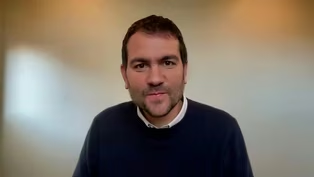
Trump Won These States. Now Republicans Face an Uncertain Midterm
Video has Closed Captions
Benjamin Wallace-Wells discusses the state of the GOP in the leadup to the midterms. (17m 39s)
Providing Support for PBS.org
Learn Moreabout PBS online sponsorship New Episode
- News and Public Affairs

Top journalists deliver compelling original analysis of the hour's headlines.
 New Episode
- News and Public Affairs

Today's top journalists discuss Washington's current political events and public affairs.

 New Episode
 New Episode
 New Episode

 New Episode
 New Episode




 New Episode
Support for PBS provided by: